Apple on the left, Google on the right. Click for a larger image.
No commentary necessary.
Showing posts with label Odds and ends. Show all posts
Sunday, September 23, 2012
Saturday, September 22, 2012
The worst thing about the Apple iPhone 5 is that it comes with iOS6
Trying to search for the nearest branch of a cafe last night on a Apple iPhone 4, updated to iOS 6 is that the Maps application is virtually useless in the Philippines. I have read complaints from users abroad saying that it takes them to the wrong place. No similar problems in the Philippines. It won't know the place exists in the first place.
Google Maps finds every branch in the country, and even some obscure places with the same name I did not know existed.
The problem would be a poor database. For places in the database, trial and error will be needed to find out if they are in the correct place. Another issue, could be typographical errors so the Map will not identify the place you are looking for. A friend of mine on her iPad 3 tweeted "check out UPD map. Kalayaan residence hall typed as 'Kalayaan Schoolicidence' haha!." A simple spell check should have detected that.
Over time that will probably be corrected. But this habit of Apple launching beta software is getting tiring. Last year, it launched Siri, as a beta, but from Apple advertisements you would not think it was beta software. But, it was not a big deal. It was an additional feature which you could simply ignore.
Mapping and locations software is one of the key features what makes a smartphone a smartphone. Apple's iOS5 had a very good map and locations software, in Google Maps and Places. iOS6, well it uses Apple Maps, which should not even be called Apple Maps Beta. It should be considered an Alpha release.
So while Apple wows us with supposedly better 3D views and features, basically, iOS6 throws all the nice hardware in the iPhone 5 back to the stone age.
Apple, please fix Maps. In the meantime, give users back Google Maps.
Monday, September 17, 2012
Speculating on the Google Galaxy Nexus II - Part 2
In the first part of this article, I wrote about what Google where Google should be conservative with its Google Nexus S II. But there are several areas where the new Nexus should step up.
5 MP camera to 8 MP. When the Google Nexus One came out it had a 5 MP camera, big for its day. While not a great shooter, the specs sheet looked right. Two versions later, the Nexus phone is still on a 5 MP camera. When the Galaxy Nexus launched last year, it was the only "flagship" grade phone with a 5 MP camera, everyone else having moved on to 8 MP or larger camera. Google should rectify that this year.
Micro SDCard slot. The last two Nexus phones, drop the MicroSD card. This year HTC and Sony followed suit with most of their phones. Samsung, the top selling Android manufacturer, keeps a MicroSD card on its phones. This is a feature Android users who already have 32 GB, 64 GB and even 128 GB MicroSD cards on their phone want.
Bigger battery. Increases in processing power will be felt only the gamers, and with Android 4.1.1, every phone fortunate enough to get it will run faster. But longer battery life is someone everyone can benefit from. It is also the weakest spot of Android top competitor, the Apple iPhone 5.
If Motorola can put a 2530 mAh battery in its 8.4 mm Motorola DROID RAZR HD, and keep the weight down to a reasonable 146 grams, Google should consider doing the same with its Galaxy Nexus S II. This alone will make this phone a compelling option in the sea of Androids.
Super AMOLED Plus Display? Another thing the Galaxy Nexus was scored for was the 720p Super AMOLED PenTile matrix display. I have no issues with the 720p display on the Galaxy Nexus, putting a Super AMOLED Plus display will keep the purist quite, and would give the phone more of a wow factor. Still, I am fine with the current display.
So, will a Galaxy Nexus, with a faster processor, upgraded camera, MicroSD card slot and bigger battery be enough for you to make a buy decision on a Nexus phone?
Sunday, September 16, 2012
Speculating on the Google Galaxy Nexus II - Part 1
Rumor is Google will be building three Nexus phones this year, which should be on sale be the end of the year. One Nexus, to be built by Sony, is rumored to be focus on the camera. A second Nexus, to be built by LG is said to be a waterproof and dust proof Nexus phone. The the third, well it would be the successor of the Google Galaxy Nexus, and is rumored to be built by Samsung.Windows Phone 8 devices now match the specifications of high end Android phones. The new 4-inch Apple iPhone 5 basically matches the specifications of what a high end 4-inch Android would be like (if high end 4-inch Android phones were still constructed, the smallest high end Android phones these days are 4.3-inches). What should Google do with its next Galaxy Nexus S?
Where Google should maintain the status quo.
4.65-inch display. The 4.65 inch display of the Google Galaxy Nexus, with the onscreen keys is about the equivalent of a 4.4-inch display with dedicated hardware buttons. It is not a monster phone anymore by current Android standards These days, 4.7 to 4.8 inch displays with dedicated hardware buttons are the new Android monster phones. Google could come out with a 5-inch phone with dedicates software keys. This would essentially be a Samsung Galaxy S III with on-screen keys. But I think Google should leave the monster smartphone clash to its OEM's. The large a phone gets, the more it serves a niche market.
Instead Google should focus on building a slightly smaller frame around its current 4.65-inch display. Cut 1-2 mm from the width, and 2-4 mm from the height, and give the same sized display in a smaller package.
1GB of RAM. The Google Galaxy Nexus already has 1 GB of RAM. It could go to 2 GB's just to upstage the Apple iPhone 5 and it Windows Phone rivals. To me this would make little sense. A Nexus phone runs vanilla Android. Much lighter than the OEM versions with TouchWiz, Sense or other interface which eat more RAM.
The Android OS should not evolve to something that needs more than 512 GB of RAM for at least the next version (Key Lime Pie) and not more than 1 GB of RAM for the 2014 version of Android. Google should keep its next Nexus to just 1 GB of RAM. Google should leave the 2 GB frontier to its OEM partners.
The processor. While you now have quad core Kraits and ARM Cortex-A15's being available, for the same reason that Google's Galaxy Nexus need not have 2 GB of RAM, it also does not have to come with the most spectacular processor. The Qualcomm's S4 with its dual core Kraits in would be a fine option. If Samsung or Nvidia can get an on-chip LTE solution in their chipsets on time, a Exynos quad or quad core Tegra 3, a quad core chip would be a strong marketing point, though not necessarily better than an Qualcomm S4.
The cheap feeling case. Whether you make a case from aluminum or plastic or some other premium quality material, if you want to remove the last trace of creak in a case, it is easy remove the battery cover. But Android owners expect a user replaceable battery, and a bit of creak is worth having the option to replace batteries or replace it with an extended battery.
So basically, what I am describing here so far is a Google Galaxy Nexus with an updated processor in a trimmed down package. But there are some area where Google should make substantial changes, to one up the competition.
Part 2 of this article is here.
The cheap feeling case. Whether you make a case from aluminum or plastic or some other premium quality material, if you want to remove the last trace of creak in a case, it is easy remove the battery cover. But Android owners expect a user replaceable battery, and a bit of creak is worth having the option to replace batteries or replace it with an extended battery.
So basically, what I am describing here so far is a Google Galaxy Nexus with an updated processor in a trimmed down package. But there are some area where Google should make substantial changes, to one up the competition.
Part 2 of this article is here.
Thursday, August 9, 2012
Smartphones: What's Coming
The second quarter of every year sees the unveiling of the latest Android phones, this year bannered by Samsung Galaxy S III, HTC One X, HTC One S and LG Optimus 4X HD. The third quarter of this year should be equally eventful:
- August 29, 2012 - Samsung Galaxy Note II (launch)
- September 5, 2012 - Nokia Windows Phone 8 (announcement)
- September 12, 2012 - Next Apple iPhone (launch)
- September 2012 - HTC Windows Phone 8 devices
In the fourth quarter of this year, around October or November you can expect to see the new Windows Phone 8 devices from Samsung, and of course the next Google Nexus phone.
Tuesday, August 7, 2012
60% of the apps on the Apple App Store have never been downloaded
![]() |
| Even with 25 Billion downloads, 400,000 apps have never been downloaded |
Looking at the Apple iPhone App Store, if I spend 30 seconds reading about each App to decide whether I wanted it or not, it would take me 150,000 minutes, or 2,500 hours or 104.17 days to go through them all.
I wrote that in December 2010. At that time the Apple Store had 300,000 iPhone apps. Today the Apple App store has a total of 650,000 apps, if you combine both iPhone and iPad apps. That is really too many apps for anyone to actually browse through. The main Android App store, Google Play had 600,000 apps and there are also thousands of other Android apps available from other sources.
Adeven has free analytic service Apptrace which collects iOS app data in the 155 countries that support the App Store. A study conducted by Adeven shows that 60% of the apps on the Apple App store, around 400,000, have never been downloaded. I would think the situation is similar on Google Play.
Anyone browsing the Apple App Store or Google Play knows that there are too many me-too apps. But the Adeven study reveals that in some cases there are just way to many me too apps. An iPhone user looking for a flashlight app has a staggering 1,899 choices for a really simple app where one really does not provide functionality different from the others.
App Store number are pretty much hype. It really is the number of useful apps which should be the metric.
Related Articles:
Saturday, August 4, 2012
A Cautionary Tale - Hacked iCloud Account Wiped an iPhone, iPad and MacBook in 5 minutes
Mark Honan writes about what happened when his iCloud account was hacked, and in a matter of five minutes the hackers remote wiped his iPhone, iPad and MacBook Air and more than a years worth of data. In his own words:
At 4:50 PM, someone got into my iCloud account, reset the password and sent the confirmation message about the reset to the trash. My password was a 7 digit alphanumeric that I didn’t use elsewhere. When I set it up, years and years ago, that seemed pretty secure at the time. But it’s not. Especially given that I’ve been using it for, well, years and years. My guess is they used brute force to get the password (see update) and then reset it to do the damage to my devices.
The backup email address on my Gmail account is that same .mac email address. At 4:52 PM, they sent a Gmail password recovery email to the .mac account. Two minutes later, an email arrived notifying me that my Google Account password had changed.
At 5:00 PM, they remote wiped my iPhone
At 5:01 PM, they remote wiped my iPad
At 5:05, they remote wiped my MacBook Air.
A few minutes after that, they took over my Twitter. Because, a long time ago, I had linked my Twitter to Gizmodo’s they were then able to gain entry to that as well.
In the case Mark Honan, the problem was once his iCloud account was compromised, all this devices were. I do not use iCloud, but the same thing could happen to me, or any or us. For most of us the key to the online world we live in revolves around our primary email address.
If a hacker is able to gain access to our primary email address, the hacker can use that email address to reset passwords in our Facebook, Twitter, Google+, Dropbox, Box or any other online service that we use. I doubt if any system can hold off a skilled and determined hacker forever, but there are a few things we can do to make your online persona and data more secure.Use Gmail and enable two step authentication. Most email services rely on a user created password to provide security. Gmail uses two step authentication. First you have your password. Second, the device you access your account to has to have been authenticated. When you log on to Google services you will be asked for your password. If this is the first time you log on with a particular device, you will be asked for an authentication code. This code is generated by an app on your smartphone or you can get the code via voice call or SMS. You can set it up to keep your device verified for 30 days, after which you have to authenticate the device again.
So basically, accessing your Gmail account means that a hacker would have to find out what your user generated password is, and that figure out the corresponding Google authentication code, which changes every minute. I would not say hack proof, nothing is, but much safer.
But I do not want to change email addresses? You do not have to. You can continue to use you Hotmail, Outlook, Yahoo or other address but you should consider using a second email address, a Gmail the address, the place where emails for password recovery are sent.
Google launches an official blog for its Android team. A nice touch is that they even used a Blogspot address: http://officialandroid.blogspot.com/. Android users may want to bookmark this page as I expect all new Android features may be coming out of this blog first.
Thursday, August 2, 2012
Android takes 68% of the Global Market Share in Quarter 2 of 2012
Operating system. Canalys reports that the Android Operating System has taken 68% of the Global Market share in Q2 of 2012. That is up from 47.6% for the same period last year.
Equally significant is that Android shipments in Quarter 2 of 2012 totaled more 107.8 million units, which is more than the total number of smartphones shipped during the same period last year. This represents a 110.4% growth.
Apple's iOS also showed growth improving in terms the number of smartphone shipped, to 26 million units, up from 20.3 million in the same period last year. Its market share declined by over 2% to 16.4% since its 28% growth was below the in industries 46.9% growth.
Windows Phone tool only 3.2% of the market, with just over 5 million units shipped for the quarter, but that is a growth of 277.3% year on year.
RIM's BlackBerry and Nokia's Symbian suffered steep declines in terms of units shipped for the quarter as compared to the same period last year.
Markets. Significantly, China is now by far the worlds largest smartphone market, with 27% of all smartphone shipments being shipped to China for the quarter. The United States accounted for 16% of all smartphone shipments.
Vendors. Samsung retained it position as top smartphone marker with shipping 45 million smartphones in the quarter, followed by Apple with 26 million. Nokia retained its third place position, while HTC moved up to fourth place, and RIM fell to fifth.
Microsoft Outlook Online: Hotmail gets Metro
Microsoft's Hotmail email service has been a good and reliable email service. But over the years it interface become a reminder of the cluttered old web interfaces of the past. The last update to Hotmail tried to correct this, but it did not work out too well.
![]() |
| Hotmail |
But little by little, the new Microsoft Metro interface which first made its appearance in Windows phones and is now moving over to tablets and personal computers is also making its way to Microsoft web services.
![]() |
| Outlook |
I do not think anyone is going to complain about Metro on the web. I has a Google like minimalist feel to it.
If you already have a Hotmail or Windows Live account, you do not need to sign up for a new address to use the new interface. Just go to the setting menu and select upgrade to outlook. You can also get a new @outlook email address. Your older email address will continue to be active unless you decide to deactivate it yourself, and you can get email from both addresses in the same Inbox or separate folders.
Lets hope SkyDrive gets the same Metro Treatment soon.
Wednesday, August 1, 2012
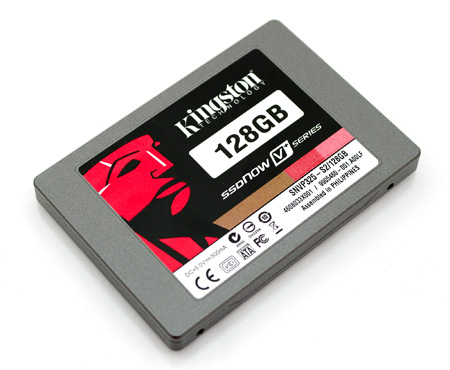
SSD now!
LaptopMag has an interesting article entitled 5 Ways to Supercharge Your Laptop For Under US$100. It is an very interesting read, I suggest you visit it. Laptopmag's first recommendation, upgrading your by replacing the current hard drive with a Solid State Drive (SSD), is the best thing you can go with any laptop, whether old or brandnew.
The problem with SSD's is they are expensive. I would not recommend a drive smaller than 120 GB or 128 GB for a laptop, unless you have on of those than can hold two hard drives. After installing your operating system and some basic apps, a 60 GB or 64 GB SSD will give you 40 GB or less of space. Also from a price standpoint, it is not worth it. A 120 GB SSD drive costs about 50% more than a 60 GB SSD. A 90 GB SSD costs almost as much as a 120 GB unit.
Going to price, a 120 GB SSD will set you back a fairly hefty amount, between Php5,000 to Php7,000, depending on the brand and performance level. You will also be likely downgrading from 320 GB to 750 GB storage to 120 GB. But do you really need to drag all your store movies, videos, music and pictures everywhere you go?
You can covert your current hard drive to an external drive and place the new SSD in your laptop. One you have a laptop on an SSD, there is no going back. If you do not believe me. Just check out the benchmarks in 5 Ways to Supercharge Your Laptop For Under US$100.
Saturday, July 7, 2012
Should you upgrade your laptop with an SSD?
The average consumer in the market for a laptop does not pay attention to kind of hard drive installed on a computer, and focuses more on capacity. A Solid State Drive (SSD) which offers much less capacity per peso than a conventional hard and is not popular with the average computer user. But if you have managed to find this obscure blog, you probably are not the average computer user. Should you consider a SSD for your laptop? A desktop user can install an SSD and a conventional hard drive and get the best of both worlds. Most laptops can accommodate only one hard drive.
Is a SSD for you? A lot depends on how you expect to use your computer. If you use your computer for typing documents and surfing the Internet, the advantages of an SSD are negligible. You will feel the laptop booth faster, resume from sleep faster and applications will start up faster. The difference is dramatically noticeable. Instead of waiting for the computer to boot for almost a minute, it will start up in about ten seconds or less. Apps launch quickly, almost like they were cached on the RAM. But that is pretty much it.
On the other hand if you are constantly downloading video, video editing, heavy on multitasking or using your computer other disk intensive tasks, the SSD will allow you do to more with less time. The speed boost comes from the fact that an SSD accesses and loads data on the drive 3x faster than a conventional hard drive. This becomes apparent when loading, copying or transferring large files. SSD's also consume less power and should extend the battery life of you laptop as well as are less prone to failure. It will also make your laptop a tad bit lighter.
There is always a downside, and the downside is cost.
The Intel 330 Series 60 GB 2.5-inch SATA 3 SSD will set you back Php4,499. That cost more than your typical 500 GB (5400 rpm) laptop hard drive. Moving up to 120 GB SSD will cost you about Php6,500 and going all the way up to 240 GB will cost you all of Php13,000. The 120 GB SSD would appear to be the best option among the three.
So, is a SSD for you? That is something each user has to decide. You would have to check how much space you are using on your hard drive right now. If it is more than 120 GB or 240 GB, is most of the data things you hardly access and willing to upload to the cloud or move to an external hard drive?
I have two laptops right now, one with a conventional 80 GB hard drive (it is a five year old unit which I never have needed to upgrade), the other with a 256 GB SSD. I also have the data on my SSD drive sync'ed to cloud.
The 80 GB hard drive is not enough to store hold my data, OS and apps, so it only locally stores essential files and my large collection of pictures is not stored in it, but can be accessed from a 50 GB Box account. But this is really an old laptop which I have kept for use at home as it still works and selling it does not seem like it is worth it.
The 256 GB SSD is in my carry laptop. Right now it stores about 85 GB of software and data. So for me, I can easily live with a 120 GB SSD, and would gladly swap a 500 GB or 1 TB hard drive for a 120 GB SSD. It will take me several years to use up the remaining 35 GB. For other users, higher capacity is more important than the speed boost of an SSD.
But if speed is more important to you than space, a SSD is the best upgrade you can give a laptop.
Friday, July 6, 2012
Smartphones - Why size matters
Some tech writers and bloggers have commented that this years Android smartphones may be getting a little to big. I myself like larger phones, but my definition of large is 4.3-inches. I too wondered whether these new generation of 4.7-inch to 5.3-inch devices was the way to go. Mobile carrier O2 conducted a study of mobile phone use, and these are their findings:
Activity | Time/day |
Browsing the internet | 24.81 |
Checking social networks | 17.49 |
Playing games | 14.44 |
Listening to music | 15.64 |
Making calls | 12.13 |
Checking/writing emails | 11.1 |
Text messaging | 10.2 |
Watching TV/films | 9.39 |
Reading books | 9.3 |
Taking photographs | 3.42 |
Total | 128 |
I was a bit surprised by the results. The average Smartphone user spend two hours a day on their smartphone, with the predominant activity being web browsing.
My own usage is more like this, from most usage to least:
- Checking and writing emails
- Text messaging
- Voice calls
- Checking social networks
- Instant messaging
- Taking photographs
- Web browsing
My smartphone has replaced my laptop as my primary email and instant messaging device. I still send email from my laptop, but only when I am composing long email. I do not instant message from my laptop anymore at all. Social networking is split between my phone and laptop and really depends on where I am. For web browsing, I only use the phone rarely, more to check something quickly when I am in a store.
When I look at my use, and compare it to O2's findings, I start to understand why the larger 4.7 to 5.3-inch devices are the way to go. People really do not use smartphones as "smarter" phones, but as small computers. Web browsing, social networking and gaming which Are the pre-dominant use of smartphones are traditionally PC activities. If you add watching TV/films and reading books, 58% of smartphone use are for activities where you would ordinarily use a PC or tablet and not a phone.
In the light of this study, it really does look like monster displays are the way to go. Even other phone activities like writing email or SMS more comfortable to do with a large display. A more compact form factor is really on beneficial for handheld calls and as a camera, which only account for 12% of smartphone use.
So it looks like todays "monster" phones are not simply based on a mindless bigger is better philosophy but responsive to what people do with their handheld computers.
Thursday, July 5, 2012
Is the AMD Trinity mobile chip a game changer?
Tablets are the first serious challenge to the laptops as the top mobile computing platform. In 2011, Intel launched the Ultrabook, a new term coined by Intel for Thin lightweight laptops. The Ultrabook itself is nothing new. Manufacturers have been building ultra thin and light laptops for years, but at a premium price. With the Ultrabook, Intel was pushing for devices similar to these premium offerings with a price point of not higher than US$999. But Apple's iPad's start at US$399, and Android tablets can cost even less, so laptop manufacturers have targeted an even lower price point for Ultrabook like devices.
While Ultrabook have been out in the Philippines now for eight months, priced at Php45,000 or higher, the price is too high for the average Philippine consumer. A few months ago, Acer priced one of their Ultrabooks at just below 40K. Still, the go to device for a person looking for a portable computer has been the netbook, the low cost 11.6-inch laptops and tablets.
Now we have the AMD powered "Ultrabook". An AMD powered laptop cannot properly be considered an Ultrabook, since that is an Intel trademarked term. But placing a AMD chipset in a chassis designed for an Intel Ultrabook gives you a "Ultrabook" like laptop but at a much lower cost.
![]() |
| The chassis of Samsung series 5 looks sleek and modern. |
Samsung sells their Series 5 NP530UC Ultrabook at Php42,900, a 13-inch laptop which is just 0.69-inches thick and weighs in at just 3.2 pounds. This slim and light package is powered by an Intel Core i5 processor, has 500 GB of storage and over six hours of battery life. At its 43K price, the best value for money option insofar 13-inch ultraportable laptops available in the Philippine market are concerned. Still, the market for 43K laptops in the Philippines is not all too big.
![]() |
| Just 0.69-inches thick at Php29,900. Will it make every other budget laptop look obsolete? |
So Samsung yanked out the SSD cache drive and pulled out the Intel Core i5 processor and Intel board. In placed it put in one of AMD Trinity A6-4455M Accelerated Processing Unit, combines a 2.1 GHz dual core processor (Turbo boost up to 2.6 GHz) and a AMD Radeon 7500 HD graphics. While this combination is not as powerful as the Intel Core i5 variant, it is fast enough to do your work related stuff, like typing documents and preparing spreadsheets and presentations. It also has enough power to run your photo editor, play HD content and do some 3D gaming.
![]() |
| 11.6-inch laptops means some degree of compromise on the keyboard. 13.3-inches has more than enough room for a full sized keyboard. |
But the main reason for putting in AMD parts (together with an operating system and a smaller battery) is price. Samsung was able to bring down the price of the AMD powered Series 5 NP535UC to just Php29,900. This will make it more accessible to a larger customer base.
The question is, is this a game changer. While Intel is leveraging its Ultrabook to re-ignite the laptop market, will these now lower cost Ultra slim AMD laptops make every Php20,000 to Php30,000 laptop obsolete? For less money than the Series 5 NP535UC you can get a more powerful 13-inch or 14-inch Intel powered laptop. But these laptops are thicker and weight at about 5 pounds.
AMD's Fusion E-350 and E-450 have basically taken over the local 11.6-inch Ultraportable market. There are not all that many Intel powered 11.6-inch in the market offered. AMD's A6-4455M is more powerful than E-450 and now competes in price with the lower cost 11.6-inch Intel power Ultraportables. A Samsung Series 5 NP535UC weighs just about as much as a Intel powered Lenovo Thinkpad e120, while providing a larger display and keyboard.
While AMD processors are loosing ground on almost all fronts, it looks like Trinity may take over the low cost Ultraportable market in developing countries.
Monday, July 2, 2012
Secure your computer and data with back-ups
Learn how to properly back-up and secure your data from a professional.
"Working as an IT professional for around 8 years now, I have had a lot of experience in the IT world. Unfortunately one of the biggest oversights people make are backups – or should I say, lack of them. It is common for companies to backup their servers so that important, business critical information is backed up and secure. But what about your holiday pictures from last year, the pictures of your new born child or personal finances etc…all of this is extremely important data and if it went missing or got damaged could be disastrous for the owner.
I’ve seen it on numerous occasions where users have not bothered to backup, then get very upset when we call them to say their failed hard drive is irreparable. Personally, I have 3 layers of backups that I use – it works for me and ensures that my data is secure. In this article I will explain how my backup regime works and give you some examples of free software that you can use to backup on both Windows & Linux."
Wednesday, June 27, 2012
The Current State of the Android Ecosystem
Google released the following information on the Android ecosytem at I/O12:
- 400 million Android devices sold.
- 1 million Android devices activated per day.
- 600 million apps in the Android app store (Google Play).
- 20 billion installs from the Android app store.
Tuesday, June 26, 2012
Why Smart Unlimited Data Plan Users get billed additional charges for "Facebook Mobile App Unli"?
For more than a year and a half Smart Unlimited Data Plan users have been reporting getting additional charges every month for Facebook Mobile App Unli, at the rate of Php10 (after VAT). Since the subscriber is on a unlimited data plan, users have been asking why they have been charged additional data charges. Some even reported being able to get bill reversals.
Allan Cruzado, a member of TipidPC has discovered what causes this charges which he explained in the TipidPC Smart Unified Users Thread as follows:
"after 2 months of monitoring i can finally confirm kung bakit tayo nachacharge ng FB mobile app unli. yong charges mangyayari everytime na mag login tayo ng new FB account. yong apr-may billing ko walang fb mobile charges kasi di ko ginalaw yong logged in account. then on may-june period i intentionally logged in 2 accounts and i got 2 counts of fb mobile. i did the same also on my consumable postpaid plan, nacharge din ako ng 1 count of fb mobile app.
i wanted to call smart for the last time and give them this information. unfortunately i am still out of the country and will be back next weekend maybe. i want to hear their side why we (unlidata plan subscribers) need to be charged with this and last chance for them to fix the problem if its really invalid charges before filing a formal complaint to the NTC.
i hope everybody having the same complaint will join us on this. if you are under UnliData Plan and getting FB Mobile App Unli charges, then please join us on this complaint. hindi po Php10 lang ang pinaglalaban natin dito kundi yong miyon-milyong piso na kinita ng smart mula sa ating mga ignoranteng subscribers. imagine 1 million subs at Php 10 each, that's an easy 10 million. if we will do nothing now because its only php10 on our side then this daylight robbery by smart will just continue."
Given my own experience with two phones Smart Unlimited Data Plans this seems to be correct. In outline form this is how it appears to work.
- When you sign-in to Facebook from any app, whether on the mobile web browser, the official Facebook app, or a third part app like Flipboard, you will get charged Php10 which is recorded in your statement as Facebook Mobile App Unli. When are you considered to have signed in? Whenever you have been asked to give your Facebook user name and password by any app or website, it counted as a Facebook sign-in.
- If you keep the web browser of app signed-in, you can view the feed, post updates or check-in without incurring additional charges. If you keep the app signed-in you can keep using Facebook for days, weeks or months without additional charges.
- If you sign-out of Facebook in the web browsers or app, or an update to the app requires a new log-in, than you will be charged again Php10.
This looks like a glitch in Smart's billing system, which they have not fixed. Smarts billing system counts sign-in by Smart postpaid users as availing of their 24 unlimited Facebook access service.
To avoid the additional billing for now, best I can recommend is sign-in to Facebook only while on WiFi. After signing in, you can continue to use it even while on 3G or GPRS.
Saturday, June 23, 2012
HTC's Smartphone Roadmap for the Second Half of 2012
Windows for October. For the next three months HTC will be hard at work preparing for the launch of its first Windows Phone 8 devices. Like the Android based One series, three HTC Windows Phone 8 devices are reportedly in the works. Two phones are reportedly slated for release in October.
The entry-level phone is dubbed the HTC Rio features a 4-inch WVGA (480 x 800) display and be powered by a new lower cost Qualcomm Snapdragon S4. The Qualcomm’s MSM8227 in the HTC Rio will have a 1 GHz dual-core Krait processor, Adreno 305 graphics supports dual channel HSDPA. The HTC Rio is reported to come with just 14.4 Mbps 3G connectivity. As the entry level offering it will be modestly equipped with 512MB of RAM and a 5MP camera. The higher end phone to be released in October is being called, for now, the HTC Accord. The HTC Accord will have 4.3-inch 720p (720 x 1280) display and a more powerful Qualcomm S4, a faster dual core Krait processor, have 1 GB of RAM and an 8MP camera. There are not details yet on what chipset will be used for this phone.
Krait 4 Christmas. HTC and Qualcomm have a long relationship. The only HTC phone not built on Qualcomm silicon is the Tegra 3 based international version of the HTC One X. Qualcomm is reportedly releasing Qualcomm APQ8064, which will host a quad-core Krait, and HTC is prepping two phones to usher in the new monsters entry into the market.
Given that dual core Qualcomm S4 devices are as fast as the quad-core competition, a quad-core Krait should be awesomely powerful.
HTC is prepping for the release of a pair of quad-core Kraits towards the end of the year, an Android phone and a Windows Phone 8 device. The Android varaint is presently being referred to as the HTC One XXL. The Windows Phone 8 version is being called the Zenith. Both phones will come with 4.7-inch 720p (720 x 1280) displays, 2 GB's of RAM and 8 MP cameras.
None of these phones have been officially announced, but the leaks would appear to be accurate.
Thursday, June 21, 2012
Windows Phone 8 is here! What happens to Windows Phone 7.5
So it is official. Existing Windows Phone devices will not be upgradeable to Windows Phone 8. Instead they will received an update to Windows Phone 7.8. When the Windows Phone 8 devices are released later this year, it will bring the platform at parity with its Android and Apple iOS counterparts with support for multi-core processors and more modern graphics chips which will bring faster performance, support for HD displays and improve multi-tasking. There are many more things being integrated and improved by Windows Phone 8. But there is really no rush discussing that now. There will be plenty of time to look at the new phones when they are released towards the end of the year.
More pressing is, what does this all mean for Windows 7.5 devices. Current Windows Phones will get select Windows Phone 8 features, but all that has been confirmed so far is the new home screen.
Owners of the Windows Phone 7 devices are satisfied with their experience. The Windows Phone 7 devices officially released in the Philippines in 2010, the HTC HD7 and the HTC Mozart, got a minor update, a major update in Windows Phone 7.5, and will get one last feature update.
Buyers of the HTC Radar released in 2011 will be a little disappointed. This midrange device gets Windows a minor update to Windows Phone 7.8, while its Android counterpart, the HTC Desire S will be getting one major update in Android 4.0. Still some midrange Android phones will not be getting the Android 4.0 update (I am looking at you, Samsung... cough... Galaxy SL... cough... Galaxy W... cough Galaxy S Advance). So in the mid-range, you can say that getting the next major update for a device is still lottery draw (well if you buy a Samsung or Windows Phone).
Buyers of the newly released Nokia Lumia 610 and 710, which are entry level, and lower mid-range smartphones will probably accept that getting updates for less expensive phones is something they should not expect (Unless you bought a Sony. Sony has updated almost all of its entire 2011 Xperia line-up).
Nokia Lumia 800 and 900 buyers. The Lumia 800 became available in April 2012, with the Lumia 900 being available a month later. In six months, both these phones fall under the category of legacy devices, joining Symbian and Meego handsets.
I think this has eroded the credibility of the Windows Phone platform.
A bit too deja vu. Buyers of Windows Phone 6.5 Professional devices, like the legendary HTC HD2 which featured unprecedented hardware for its time, felt abandoned when they found out the Microsoft would not be updating their phones to Windows Phone 7. Having the same situation repeat itself two years later with phones like the Nokia Lumia 800 and 900, and HTC's Titan and Titan II, will feel a bit to deja vu.
Smoke by Windows Phone 8. Microsoft sponsored a much publicized campaign to highlight that a smartphone need not have cutting edge hardware if it is a Windows Phone. After months of convincing you that hardware which was cutting edge two years ago, can still cut it today... well Microsoft now tells you your hardware is not cutting edge enough.
The biggest loser here is Nokia. LG and ZTE opted out of the Windows Phone device arena. Huawei still has to release one. HTC and Samsung will dispose of their current stock at fire sale prices, continue selling Android phones, and prepare for the next generation of Windows Phone 8 devices.
Ask a HTC or Samsung executive about it, and they will shrug their shoulders and say there was nothing they could do about it. Neither company actually spent much time Marketing their Windows Phone 7.5 devices. Samsung did not officially release a Windows Phone device in the Philippines. The last Windows Phone device officially released by HTC in the Philippines was in 2011, with the HTC Radar.
For Nokia, is is a different story.
Nokia's name is tarnished. Nokia launched the Nokia Lumia 900, headlining that the "Smartphone Beta Test is Over". It turns out, with the announcement of Windows Phone 8 the beta test is over. The problem is, the Nokia Lumia 900 and 800 are part of the beta test.
What will Nokia sell until October. Nokia has no Android phones to sell till October or November. It will have to marker and sell Windows 7.5 and Windows 7.8. Ironically, Nokia is used to this. It is now the official repository of almost all the worlds dead Smartphone operating systems: Symbian, Meego and Windows Phone 7.8. It has no choice but to sell a phone based on a operating system quickly fading into obsolescence.
Every Nokia phone sold in the next four or five months, runs the risk of losing goodwill. Every buyer may feel that he or she was misinformed when the buyer learns that the nice shiny device in his or her hands, was obsolete at the time of purchase. How can buyers not notice when in four of five months, Nokia advertises their new and better devices.
In the end, it is all up to the app developers. You now have two versions of the Windows Phone operating system. Windows Phone 7.x based on the Windows CE kernel and Windows Phone 8 based on the NT Kernel. For buyers, Windows Phone 8 is a few months away. For app developers they get the new API's (developer tools) for Windows Phone 8 now.
If developers start coding their apps for Windows Phone 8 they probably wont be compatible with current phones. Windows Phone 7.5 apps will run on Windows Phone 8 devices, so developers can continue to code on the old API's. But that means they wont be able to take advantage of multi-core processing. I do not want to venture a guess on how this will go.
Worse part is, Nokia still needs Windows Phone 7.8 even after October. Just six days ago, Nokia announced its battle plan. Nokia CEO Stephen Elop announced "We need to compete with Android aggressively. The low end price point war is an important part of that."
With Windows Phone 8 requiring dual core processors as a minimum requirement, while Android phones can get by on single core processors, it will be hard for Nokia to compete at the entry level unless they continue to build Windows 7.8 devices even after October 2012.
Nokia had confirmed to PCMag, that Windows Phone 7 devices will continue to be sold by Nokia, even after Windows Phone 8 is released.
Microsoft just gave Windows Phone 7.5 owners a stereo. One person I was chatting with on Google+ likened it this way. Apple with iOS 6 is giving the update even to its iPhone 3GS of 2009. Sure you loose a lot of features that are available only on newer iPhones. Microsoft is giving the new start screen to Windows Phone 7.5 owners via Windows 7.8. So Apple gives its old "cars" and new engine, minus the stereo. Microsoft gives its not so old cars a stereo, but does not give you the new engine.
Others will point at Android 2.3.6 devices in the market today and say Microsoft's move is not so different. Android 2.3.6 devices are on the same kernel as Android 4.0 devices. Some apps which require newer features in Android 4.0 wont run. But that situation is milder than Windows Phone's fragmentation where the Windows Phone 7.8 devices will be running on the Windows CE kernel (think Windows 98) while Windows Phone devices will be running on the NT Kernel (think Windows XP/Vista/7).
Microsoft situation is more like RIM and it BlackBerry. When BlackBerry 10 is released it will leave all current BlackBerry phones in its dust. When Windows Phone 8 comes out, it will leave all existing Windows Phones its legacy to a failed two year experiment.
Tuesday, June 19, 2012
Subscribe to:
Posts (Atom)